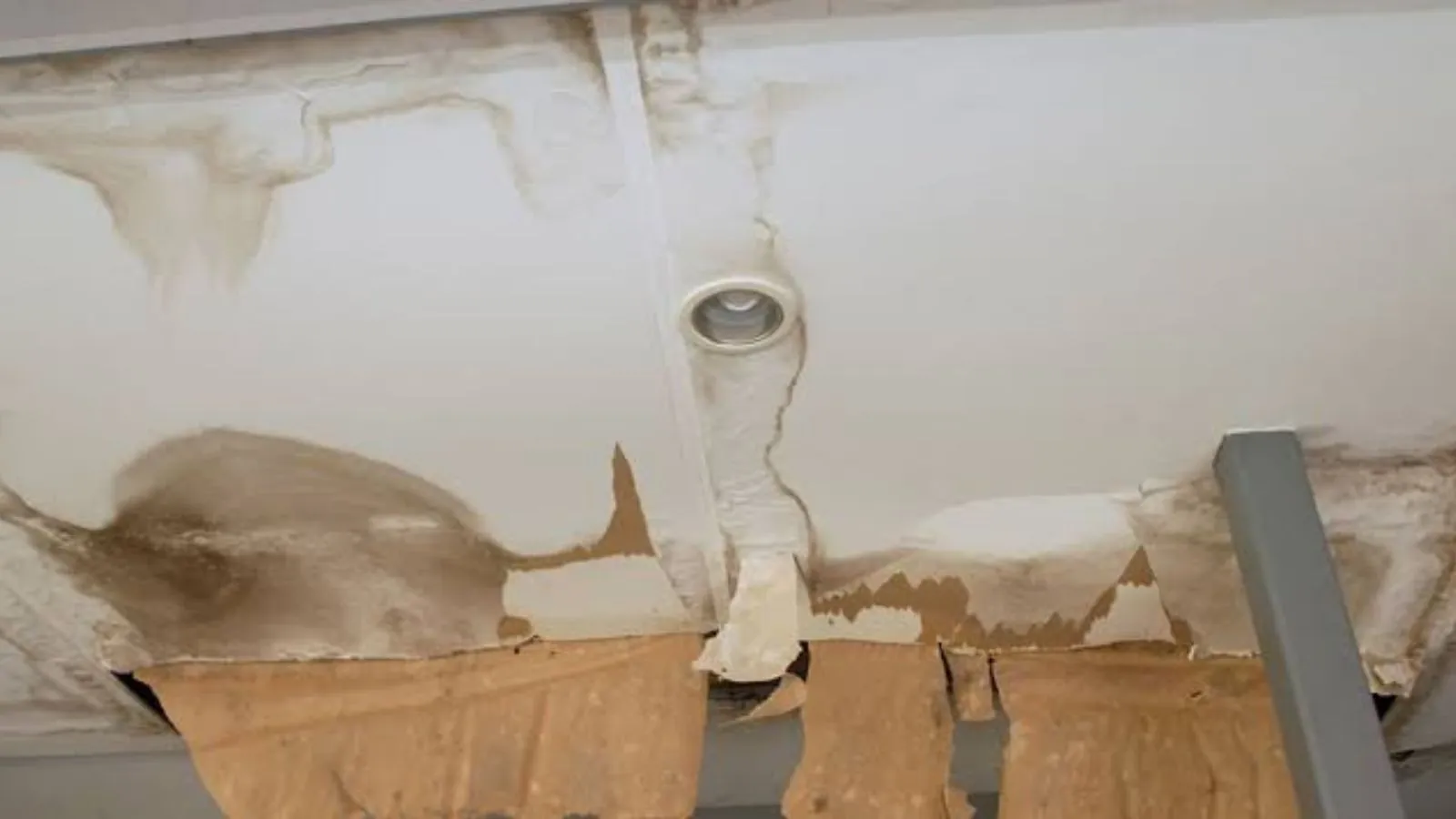
Water in a Wall Needs to Be Found, Not Painted Over
A stain, bubble or soft spot on a wall is the visible end of a wet cavity. Behind the surface the drywall, insulation, studs and bottom plate may all be damp. Painting over it hides the signal and leaves the wet materials in place.
Stop the water source first. Then use a moisture meter and thermal camera to read how far the water traveled.
Signs of water in a wall
- Brown or yellow stains, often with a ring around the edge.
- Bubbling, peeling paint or wallpaper.
- Soft, crumbly or swollen drywall at the base.
- A musty smell near the wall.
- Warped baseboards or trim.
Water comes from pipes inside the wall, a leaking window or roof above, or from a room next door. Gradual leaks leave a stain long after the water stops.
Plaster, lath and drywall in Manchester homes
Older houses often have plaster over wood lath, while newer rooms and renovations use drywall. Plaster holds up to water better than drywall, but it can crack and loosen from the lath when wet. Drywall softens and may need to be cut out. The restoration plan differs for each, and mixed houses often have both in adjoining rooms.
Water from above often ends up in a wall, so see ceiling water damage if the stain started at the top. Dried but affected materials may also overlap with mold concerns.
How wall repair works
- Stop the water and confirm the source is fixed.
- Take readings across the wall and at the floor and ceiling edges.
- Cut a flood cut, usually about a foot to two feet above the wet line, to remove wet drywall and insulation.
- Dry the studs and bottom plate with air movers and dehumidifiers.
- Replace insulation and drywall, then tape, mud, prime and paint.
Dry in place or cut out
| Condition | Usual path | Why |
|---|---|---|
| Stain, drywall still firm and dry | Fix the source, check readings and repaint | Water has stopped and the board is sound. |
| Soft or bulging drywall | Cut out and replace | Saturated board loses strength. |
| Wet insulation behind the wall | Remove and dry the cavity | Insulation traps water. |
| Plaster loose from lath | Repair or replace sections | Bond is damaged. |
| Ongoing stain after paint | Check for an active leak | Paint does not stop moisture. |
Cost and insurance for wall damage
What moves the price
These factors set the price:
- The size of the wet wall area and the height of the wet line.
- Drywall or plaster construction.
- Insulation and framing involved.
- The drying days.
- Texture, paint and trim matching.
Want your real number? Call (833) 521-1033.
A sudden leak is often a covered cause, and gradual leaks are often excluded. Photograph the wall and ask your insurer.
Water still spreading? Call now.
Call (833) 521-1033Finishing work after drywall repair
New drywall is hung, taped and finished with joint compound in several coats, each of which has to dry before the next. The wall is sanded, primed and painted. Matching texture and paint color takes care, and a full wall of paint often looks better than a spot patch. Allow time for the finishing steps, since they take longer than the demolition.
If the room has wallpaper or special trim, tell the crew at the start so replacement can be planned.
Insulation and vapor questions
- Wet fiberglass insulation is usually removed and replaced.
- Spray foam can be cut out in sections.
- Exterior walls need the vapor layer put back.
- Interior walls usually need no vapor layer.
Common sources of wall water
A split supply line is the most common hidden source, covered on the burst pipe page. Wall bases near the sink or dishwasher are covered on the kitchen page, and the framing is dried as on the structural drying page.
What to do before help arrives
Stop the water source and keep people and pets away from any wall that is bowing. Do not poke holes in a wet wall near wiring, and do not paint or caulk over a damp patch. Photograph the stain and mark its edge with a pencil so spread can be tracked.
The standard that governs wet walls
ANSI/IICRC S500 expects the wall cavity to be measured and dried, not just the surface. Wet insulation and soaked drywall are normally cut out, while sound framing can be dried in place. Readings taken before and after show whether the cavity is ready to close.
Where we repair walls
Wall and drywall repair is available across 06040, 06041, 06042 and 06045. Homes in South Glastonbury, West Hartford, Broad Brook, East Windsor, East Windsor Hill, Newington, East Glastonbury, Windsor, Poquonock, East Hartford, Hartford, Marlborough, Glastonbury, South Windsor, Wethersfield, Rocky Hill and Bloomfield are covered too.
Frequently asked questions
Can I just paint over a water stain?
Only if you are sure the water has stopped and the wall is dry. Otherwise the stain returns and the wet materials stay in place.
How do I know there is water inside the wall?
A moisture meter and a thermal camera find wet areas without cutting. Visible signs include bubbling, stains and soft drywall.
Do you replace all the drywall?
No. The crew cuts out only what readings show is wet or damaged and replaces that section.
How long until the wall can be repainted?
After framing readings are normal and the new drywall is finished. Painting too early traps moisture.
Still have questions? Call (833) 521-1033