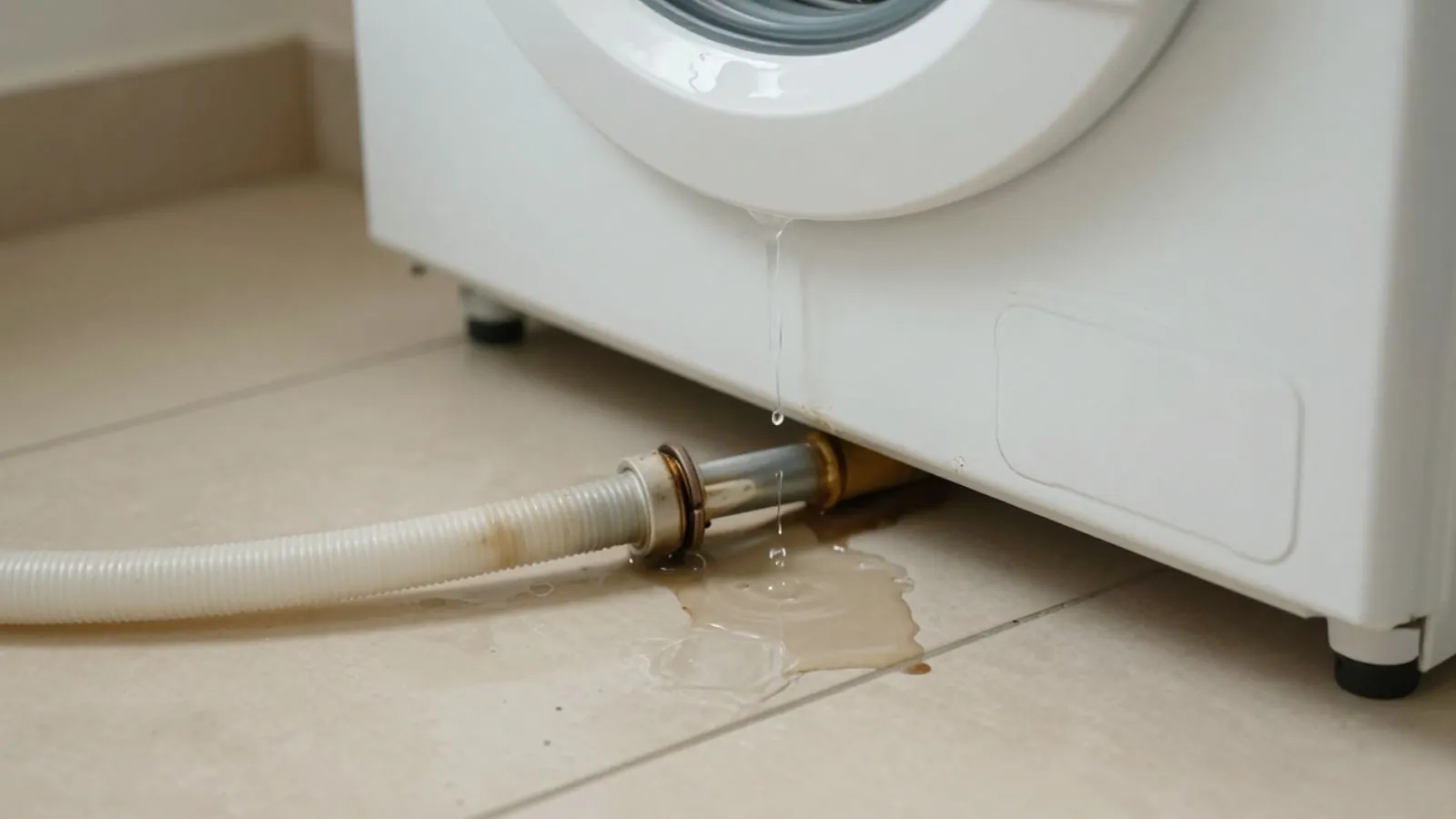
Appliance Leaks Are Emergencies Because the Water Hides
A hose that fails on a washing machine will keep pumping until someone shuts the valve. The line is answered 24/7. Close the shut-off valve behind or beside the appliance, unplug it only if the floor around the outlet is dry and keep people out of wet areas.
Appliance water travels under flooring and into cabinet bases, so a small puddle is often only the visible part. A moisture meter finds the rest.
Before We Arrive: Appliance Leak Steps
Shut the valve
Find the small supply valve behind the washer, dishwasher or fridge and turn it fully off.
Unplug if dry
Pull the plug only if you are standing on a dry floor. Otherwise cut power at the panel from dry ground.
Lift contents
Move rugs, laundry baskets and cabinet contents off wet surfaces.
Keep the failed part
The cracked hose or fitting helps the plumber and your insurer understand what failed.
Common appliance leak sources
- Washing machine supply hoses and drain hoses.
- Dishwasher door gaskets, inlet valves and drain lines.
- Refrigerator and ice maker supply lines.
- Water softeners and humidifiers that connect to the plumbing.
- Condensate drains from dehumidifiers and portable air units.
Rubber hoses and plastic fittings age and fail. Stainless braided hoses last longer but are not immune. Many leaks start behind the appliance, where it is hard to see until the floor feels soft or the baseboard stains.
Why a leak behind an appliance goes unnoticed
Appliances sit against walls, so a drip can run down inside the wall cavity or under the cabinet toe kick for days. By the time a stain shows on the ceiling below, the subfloor may already be wet. In two family houses and apartment buildings around Manchester that is how an upstairs washer becomes a downstairs ceiling problem, so check the ceiling below an upstairs laundry if there has been a leak. See the ceiling page for that stage.
How cleanup works
- Stop the water and confirm it is shut off at the appliance.
- Extract standing water and pull the appliance out so the wall and floor behind it can be read.
- Take moisture readings on the floor, baseboards, cabinets and the wall behind.
- Dry the area, removing the toe kick or a strip of drywall if the readings call for it.
- Reinstall cabinets and flooring and repaint if needed.
Appliance leak: dry in place or open up
| Finding | Usual response | Why |
|---|---|---|
| Water only on a sealed floor | Extract and dry the surface | Nothing absorbent was reached. |
| Water under vinyl or laminate | Lift planks or sheet and dry beneath | Water traps between the floor and subfloor. |
| Wet cabinet bases or toe kicks | Remove the kick, dry the cabinet base | Particleboard swells and does not recover. |
| Water in the wall behind | Small cut at the base of the wall | Insulation and drywall hold moisture. |
Water still spreading? Call now.
Call (833) 521-1033Cost and insurance for appliance leaks
What moves the price
A leak from an appliance is priced from:
- How long the water ran before it was found.
- The floor type and what is under it.
- Whether cabinets or walls were reached.
- The drying days needed.
- The rebuild scope.
Want your real number? Call (833) 521-1033.
Sudden hose or valve failures are often covered, while slow leaks over weeks are often excluded. Photograph the area, keep the failed part and ask your insurer what it needs.
Prevention that actually helps
Most appliance leaks come from hoses and fittings. Replace rubber washer hoses with braided stainless hoses and write the install date on the hose. Check behind the dishwasher and under the sink for dampness each season. A water leak sensor near the washer, dishwasher and refrigerator costs little and sounds an alarm when water reaches it.
Turn the washer supply valves off when the house is empty for a long trip. A hose that bursts while no one is home runs the longest.
What a crew looks for after the water is out
- Swelling in the floor edge near the appliance.
- Loose or lifting toe kicks and baseboards.
- Dampness in the wall behind and in the cabinet beside the appliance.
- Staining in the ceiling or wall below, if the appliance was on an upper floor.
When an appliance leak reaches the kitchen or the floor
A dishwasher or refrigerator line often leaks into cabinets and flooring, which the kitchen page covers. Standing water is removed as described on the extraction page, and the area is dried as described on the structural drying page.
The published drying standard
Dishwasher, washing machine and refrigerator line leaks are usually clean water events under ANSI/IICRC S500. The standard expects moisture mapping, controlled drying and documented readings, which is the same record an insurance adjuster tends to ask for after an appliance claim.
Where appliance leak crews respond
A leaking washer or dishwasher gets the same response in ZIP codes 06040, 06041, 06042 and 06045. Callers in East Windsor Hill, East Hartford, Hartford, Poquonock, Glastonbury, West Hartford, Windsor, Wethersfield, South Glastonbury, Newington, Bloomfield, Marlborough, Broad Brook, South Windsor, Rocky Hill, East Glastonbury and East Windsor reach the same line.
Frequently asked questions
Do you handle appliance leak emergencies at night or on weekends in Manchester?
Yes. The line is answered 24/7, and appliances fail at all hours. Tell the dispatcher what leaked and where.
Do you repair the washing machine or dishwasher?
No. An appliance repair technician or plumber fixes the machine. The restoration crew handles the water, drying and rebuild.
Can I leave the floor to dry on its own?
Surface water dries, but water under flooring and inside cabinets and walls does not. Leaving it invites swelling and mold.
The leak was upstairs. Do I need to check below?
Yes. Water follows gravity, so check the ceiling and walls in the room below and call if you see a stain or sag.
Still have questions? Call (833) 521-1033