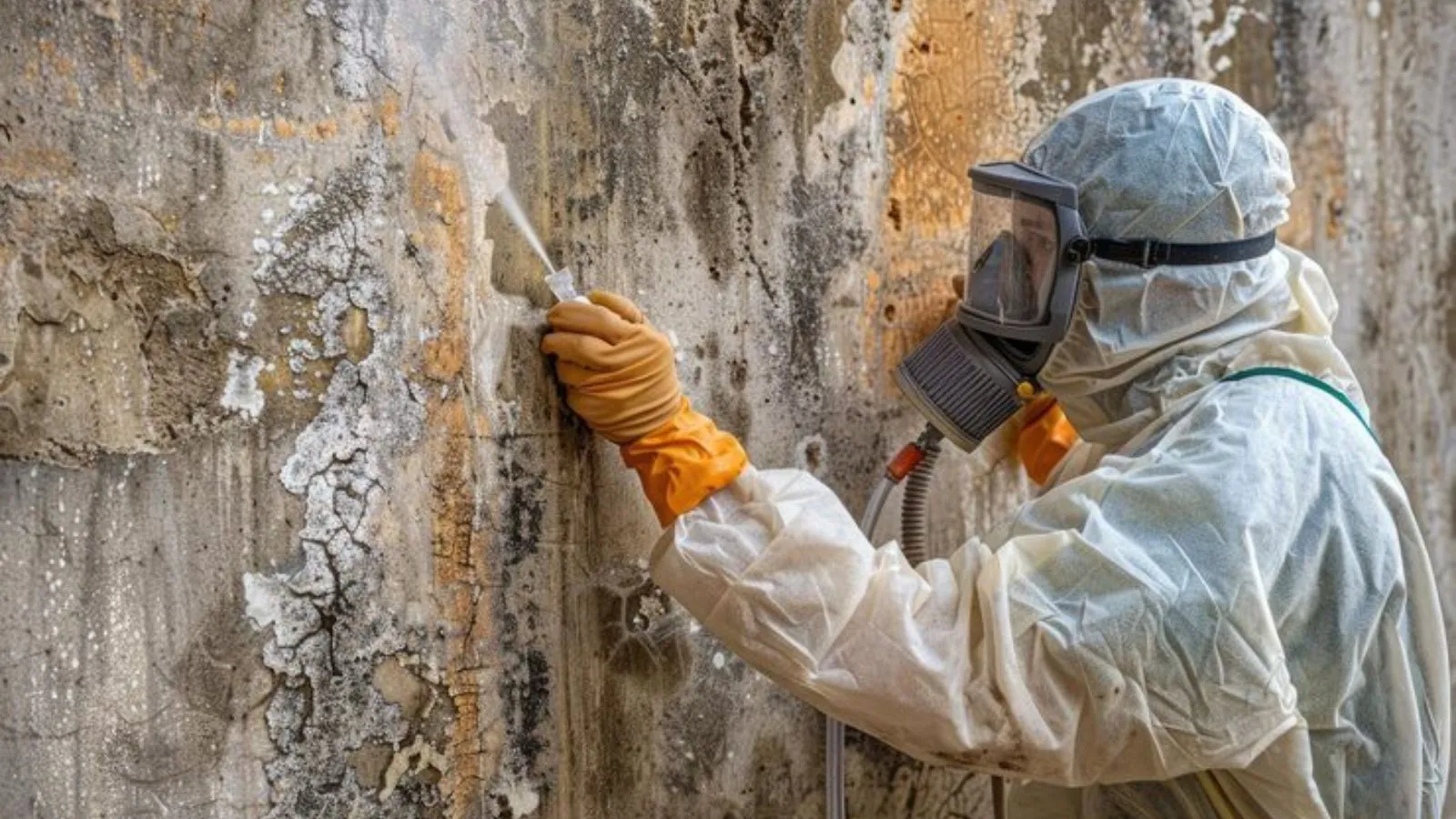
Mold Starts Where Water Stays
Mold needs moisture and an organic material to feed on, such as drywall paper, wood, carpet backing and insulation. A house that stays wet for a day or two after a leak can start to grow it. The cleanup that matters most is the one that removes the moisture, and remediation deals with growth that is already there.
Do not scrub or spray mold with a household cleaner, and do not run fans over it. Disturbing it can spread spores to other rooms.
From water damage to mold: how to tell the two apart
Water damage and mold often show up together. A water stain is a discolored area with a clear edge, and mold appears as fuzzy or speckled growth in colors from white to black, usually with a musty odor. Both signal a moisture source that must be found.
- Check for the source first, such as a leaking pipe, a roof leak or high humidity.
- Look at hidden areas, such as under sinks, behind appliances and in attics.
- Read the humidity, since indoor relative humidity above about 60 percent supports growth.
- Call a restoration company if the growth covers more than a small patch.
A small patch on a hard surface from condensation is a cleaning job, and growth on drywall, carpet or insulation, or after a leak, is a remediation job.
Testing and inspection
Some people want a mold test, and a test can tell you what kind of mold and how much is in the air. It does not tell you where the moisture came from. A visual inspection with a moisture meter finds the wet materials, and many remediation plans start there. If you want sampling, an independent inspector can do it and should be separate from the company doing the cleanup.
Lenders and buyers sometimes ask for mold clearance. If you are selling or refinancing, ask your lender or agent what documentation they accept.
How mold remediation works
- Find and stop the moisture source.
- Set up containment with plastic barriers and negative air to keep spores in the work area.
- Remove materials that are affected and cannot be cleaned, such as drywall, insulation and carpet.
- Clean and treat salvageable surfaces such as framing with HEPA vacuuming and approved cleaners.
- Dry the area to normal moisture readings and rebuild.
Drying is the foundation of the job, as described on the structural drying page, and cause-based pages such as basement water damage and wall repair cover where it starts.
Mold cleanup compared with water cleanup
| Feature | Water damage cleanup | Mold remediation |
|---|---|---|
| Starting point | Wet materials and standing water | Visible or suspected growth on materials. |
| Containment | Usually not needed | Often used to keep spores in place. |
| What gets removed | Materials that cannot dry | Materials with growth that cannot be cleaned. |
| Final step | Readings return to normal | Readings normal and the source fixed. |
Water still spreading? Call now.
Call (833) 521-1033Cost and insurance for mold work
What moves the price
Mold work is priced from:
- The area and the materials affected.
- Containment and air handling needs.
- The access to the area, such as an attic or crawl space.
- The drying that is still needed.
- The rebuild scope.
Want your real number? Call (833) 521-1033.
Many policies limit or exclude mold unless it follows a covered water loss, so read your policy and ask your insurer. Photograph the area before anything is removed.
What not to do when you find mold
- Do not blow a fan or run the HVAC over it.
- Do not scrub dry growth, which sends spores into the air.
- Do not paint or seal over it, which hides the problem.
- Do not bleach porous materials such as drywall, since bleach does not reach growth below the surface.
Contain the area by closing doors, and reduce the humidity with a dehumidifier if the area is not the source of the water.
Mold and your insurance and records
Keep a record of when the water event happened, what was done and when drying started. This helps an insurer understand whether the mold follows a covered loss. Take photographs before removal, keep moisture logs and ask for the scope in writing. These records are also what a buyer, a lender or a landlord may ask for later.
The standard for mold work
ANSI/IICRC S520 is the published standard for professional mold remediation. It describes containment, source control, cleaning and the use of a third party to verify results. It does not give health advice, so questions about symptoms belong with a physician.
Where we handle mold remediation
Mold remediation is offered across 06040, 06041, 06042 and 06045. Homes in East Windsor, South Glastonbury, Wethersfield, East Hartford, East Glastonbury, Newington, West Hartford, South Windsor, Glastonbury, Marlborough, East Windsor Hill, Hartford, Windsor, Bloomfield, Poquonock, Broad Brook and Rocky Hill are covered too.
Frequently asked questions
Do I need a mold test before remediation?
Not always. A visual inspection and moisture readings are often enough to scope the work. If you want testing for a lender or for your own records, ask an independent inspector.
Can I clean mold myself?
A small patch on a hard surface can be cleaned. Growth on drywall, carpet or insulation, or any area larger than a small patch, should be handled by a crew in containment.
What if I am buying or refinancing and the lender wants mold documentation?
Ask the lender or your agent what they accept. They may require an independent inspection, and the restoration company can provide scope and moisture records on request.
How do I stop mold from returning?
Fix the moisture source and keep humidity under control. Remediation removes growth, and dry conditions are what stop new growth.
Still have questions? Call (833) 521-1033