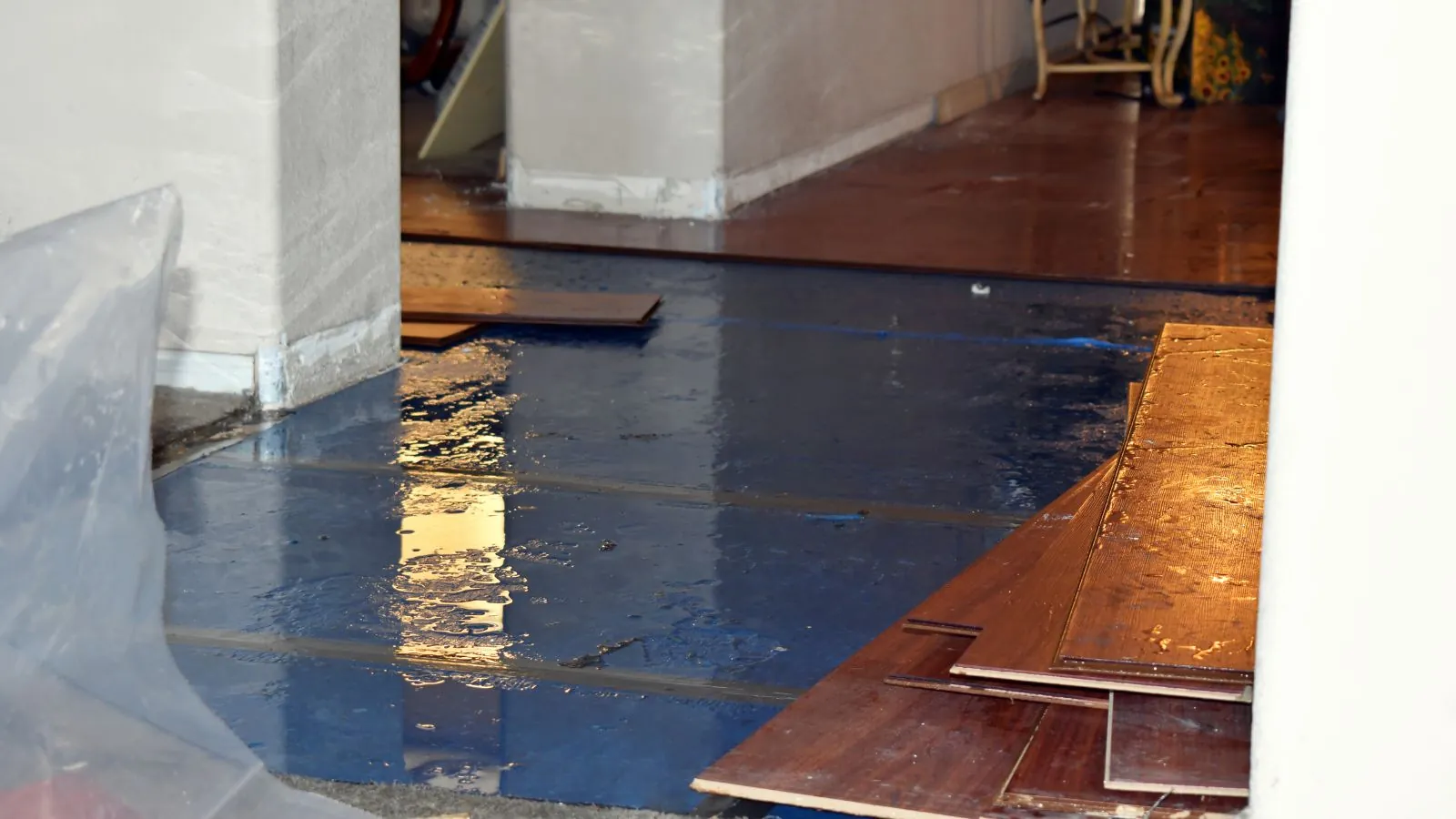
Storm Water Damage Needs Fast Action Before the Next Round
A storm can wet a house from above and from below. Rain gets through damaged shingles, flashing and windows, while heavy runoff presses water through foundation cracks and window wells. The line is answered 24/7, and storms often bring several calls at once.
Safety comes first. Stay away from downed lines, do not stand in water near electrical equipment and call the utility if you see damage to service lines.
Before We Arrive: Storm Water Steps
Stay safe
Avoid flooded rooms with live electrical equipment and stay clear of downed lines.
Cover the opening
A tarp over a damaged section of roof or a board over a broken window limits more rain. Only do it if you can do it safely from the ground or a stable position.
Photograph
Take pictures of the damage and the water before anything is moved.
Call the line
Describe where water is entering and how much has come in.
What storms do to Manchester houses
Town planning documents record that summer storms in 2021 washed out Ambassador Drive, damaged Charter Oak Park and flooded a road near the wastewater treatment plant. Those events were on public property, but they show how fast runoff can overwhelm drainage in the Hockanum River basin.
For a house, the typical storm problems are leaking roofs and flashing, water coming through basement walls and window wells, clogged gutters that send water to the foundation and fallen limbs that open the roof. The roof repair itself is roofing work, and the restoration crew takes care of the water.
How storm water cleanup works
- Make the building safe and cover openings where possible.
- Extract standing water and remove soaked materials that cannot be dried.
- Map wet areas in ceilings, walls and floors.
- Dry the structure and check readings until normal.
- Rebuild after the roofer and other trades finish their repairs.
If the water came from rising outside water, read about flood damage cleanup. If it came through the roof and now stains the ceiling, the ceiling repair page applies.
Where storm water comes in and what to do
| Entry point | Typical sign | Cleanup focus |
|---|---|---|
| Roof or flashing | Stain on a ceiling and wet attic insulation | Dry attic and ceiling, replace wet insulation. |
| Windows and doors | Water at the sill and wet trim | Dry the wall base and flooring edge. |
| Foundation or window well | Water on the basement floor after rain | Extract and dry, see the basement page. |
| Overflowing gutters | Wet fascia and soffit, damp walls | Dry the wall and fix drainage. |
Water still spreading? Call now.
Call (833) 521-1033Cost and insurance for storm water damage
What moves the price
Storm jobs are priced by:
- How much water entered and where.
- The materials affected, such as ceilings, insulation and flooring.
- Whether the roof must be tarped first.
- The drying days.
- The rebuild scope.
Want your real number? Call (833) 521-1033.
Wind-driven rain through a storm-damaged opening is often covered, while flood from rising water is not. Check your policy, photograph everything and ask your insurer what it needs.
Preparing the house before the next storm
Clean gutters and extend downspouts so water leaves the foundation. Check the roof after heavy wind for missing shingles and lifted flashing. Test the sump pump by pouring water into the pit, and consider a battery backup for power outages. Keep a tarp, plastic sheeting and duct tape for quick cover of a small opening.
These steps lower the odds of water entering and make cleanup easier if it does.
After the storm passes
- Photograph the roof and exterior from the ground.
- Check the attic for stains and damp insulation.
- Look at window and door trim for water marks.
- Check the basement walls and floor drains.
Water damage is often found days later, so a second check after the first rain helps.
How the standard treats storm water
Rainwater that comes in through a roof or window starts as a lower contamination category, while water that rises from the ground is treated as Category 3. ANSI/IICRC S500 is the published reference for sorting the two, and the sorting decides what can be dried and what is removed. Wet interiors then move to structural drying once the water is out.
Where we respond after storms
After a storm the line takes calls from 06040, 06041, 06042 and 06045. It also takes calls from Wethersfield, Windsor, Broad Brook, East Windsor, West Hartford, East Glastonbury, East Windsor Hill, Marlborough, Rocky Hill, South Windsor, East Hartford, South Glastonbury, Glastonbury, Hartford, Poquonock, Bloomfield and Newington. During large storms crews triage by risk, so a clear description helps.
Frequently asked questions
Do you handle storm water emergencies at night or on weekends in Manchester?
Yes. The line is answered 24/7, and storms rarely wait for business hours.
Do you repair the roof?
No. A roofer repairs the roof. The restoration crew dries and rebuilds the interior and can recommend covering the opening first.
Is wind-driven rain covered by insurance?
Often yes when it enters through a storm-created opening, but rules vary. Flood from outside water is typically excluded. Check your policy.
Should I wait for the rain to stop?
No. Call right away, because water inside the house keeps soaking materials while the storm continues.
Still have questions? Call (833) 521-1033