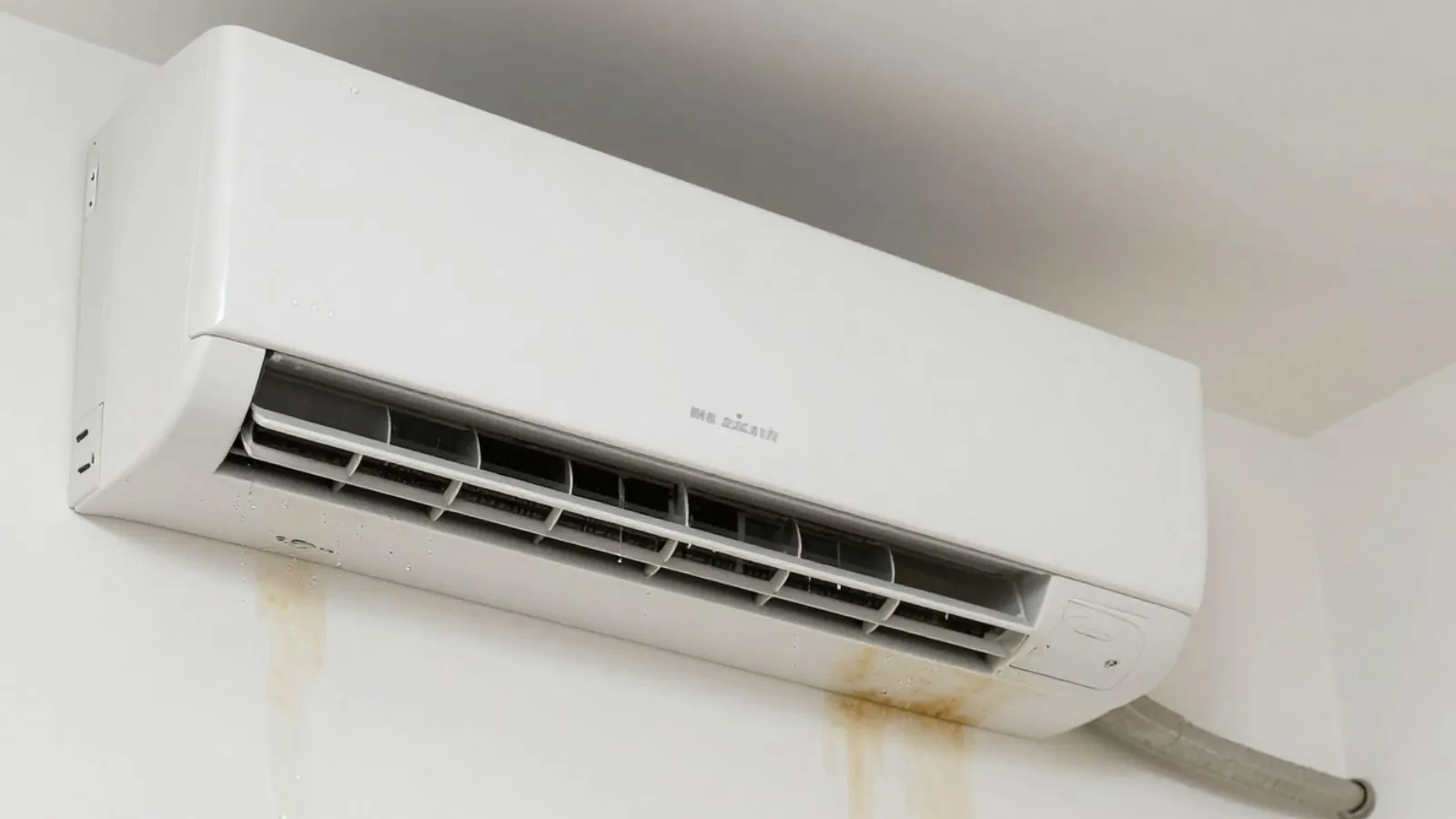
AC Leaks Are Quiet and Slow, Which Is What Makes Them Costly
Cooling equipment pulls water out of humid air, and a drain line carries it away. When the line clogs or the pan cracks, the water goes into whatever sits below the air handler. It rarely floods and more often soaks insulation, drywall and framing for weeks.
Turn the system off at the thermostat the moment you see water or a stain. That stops the equipment from producing more while you arrange the drying. Call the line at any hour if the ceiling is sagging.
Signs of an AC leak
- A brown ring or stain on a ceiling below an attic air handler.
- A damp closet floor or a wet wall near an indoor unit.
- Water in the drain pan or dripping from the unit.
- A musty smell near vents or the closet where the unit sits.
- A system that shuts itself off, because many have a float switch that stops the unit when the pan fills.
A technician clears the line or replaces the pan. The restoration crew deals with the water that already left the system.
Why AC water damage often goes unseen
Air handlers are often in attics, closets and crawl spaces, places most people visit rarely. A drip can run for a whole cooling season before a ceiling stain shows. Since the water comes from condensation, it is usually clean when it leaves the unit but it feeds mold on wet insulation, so the longer it sat the more likely wet materials have to be replaced.
Humid weather makes systems run hard, and a common cause of a clog is algae and dust in the line. A yearly drain cleaning by an HVAC technician is the usual prevention. For mold concerns, see the mold remediation page.
How cleanup works
- Turn the system off and fix the drain or pan, which is HVAC work.
- Use a moisture meter and thermal camera to map wet insulation, drywall and framing.
- Remove insulation and drywall that stayed wet too long to dry in place.
- Dry the cavity with air movers and dehumidifiers.
- Rebuild the ceiling or wall and repaint.
A ceiling that has sagged is covered on the ceiling repair page, and the structural drying page explains the equipment.
AC leak damage compared with other leaks
| Feature | AC condensate leak | Pipe leak |
|---|---|---|
| Speed | Slow and steady, often for weeks | Often fast and heavy. |
| Where | Below attic or closet air handlers | Anywhere a pipe runs. |
| Main risk | Wet insulation and mold | Large volumes and fast spread. |
| Typical finding | Stain found late | Water found right away. |
Water still spreading? Call now.
Call (833) 521-1033Cost and insurance for AC leaks
What moves the price
These factors decide the job size:
- How long the leak ran.
- How much insulation and drywall are wet.
- Attic access and ceiling height.
- The drying days.
- The rebuild and paint scope.
Want your real number? Call (833) 521-1033.
Coverage depends on how the leak happened and how long it ran, and long-term leaks are often excluded. Photograph the unit and the stain and ask your insurer.
Condensate line basics
Most cooling systems produce a few gallons of water a day in humid weather, and the drain line carries it to a drain or outdoors. Many systems have a secondary pan and a float switch that shuts the unit off if water rises. If either part fails or is missing, a clogged line can send the water over the edge and into the ceiling.
An HVAC technician can flush the line, install a float switch and check the pan. Do this before the cooling season rather than after a stain appears.
Cleanup priorities for attic and closet units
- Remove wet insulation first, since it holds water and feeds mold.
- Check the ceiling drywall below with a moisture meter before painting.
- Dry the framing around the air handler, which may have been wet for weeks.
- Look for wet spots near the supply and return ducts, where condensation also forms.
If the stain has a musty smell, ask about mold at the same visit.
What to do before help arrives
Turn the air conditioner off at the thermostat so it stops producing condensate. Do not touch wet electrical components, and keep people away from any ceiling that is bulging or dripping. Place a bucket under active drips and photograph the damage before anything is moved.
The standard that applies
Condensate overflow is normally a clean water loss under ANSI/IICRC S500. Because a slow drain clog can wet insulation and drywall for a long time before anyone notices, the standard calls for moisture readings of the surrounding materials and not just the visible stain.
Where we respond to AC leak calls
AC drain and pan leaks are handled in all four Manchester ZIP codes, 06040, 06041, 06042 and 06045. The same crew covers Hartford, Bloomfield, Wethersfield, West Hartford, East Glastonbury, East Windsor Hill, East Windsor, Glastonbury, Marlborough, East Hartford, South Windsor, Rocky Hill, Newington, Windsor, Poquonock, South Glastonbury and Broad Brook.
Frequently asked questions
Do you fix the air conditioner?
No. An HVAC technician clears the drain or replaces the pan. The restoration crew handles the water damage.
Can AC water cause mold?
It can. Wet insulation and drywall that stay damp for days support mold growth, which is why drying quickly matters.
Is AC condensate water clean?
It starts relatively clean, but it can pick up dust and algae from the line and pan, and it turns into a mold problem if it stays wet.
Should I keep running the system?
Turn it off while water is leaking. Running it makes more condensate and widens the damage.
Still have questions? Call (833) 521-1033