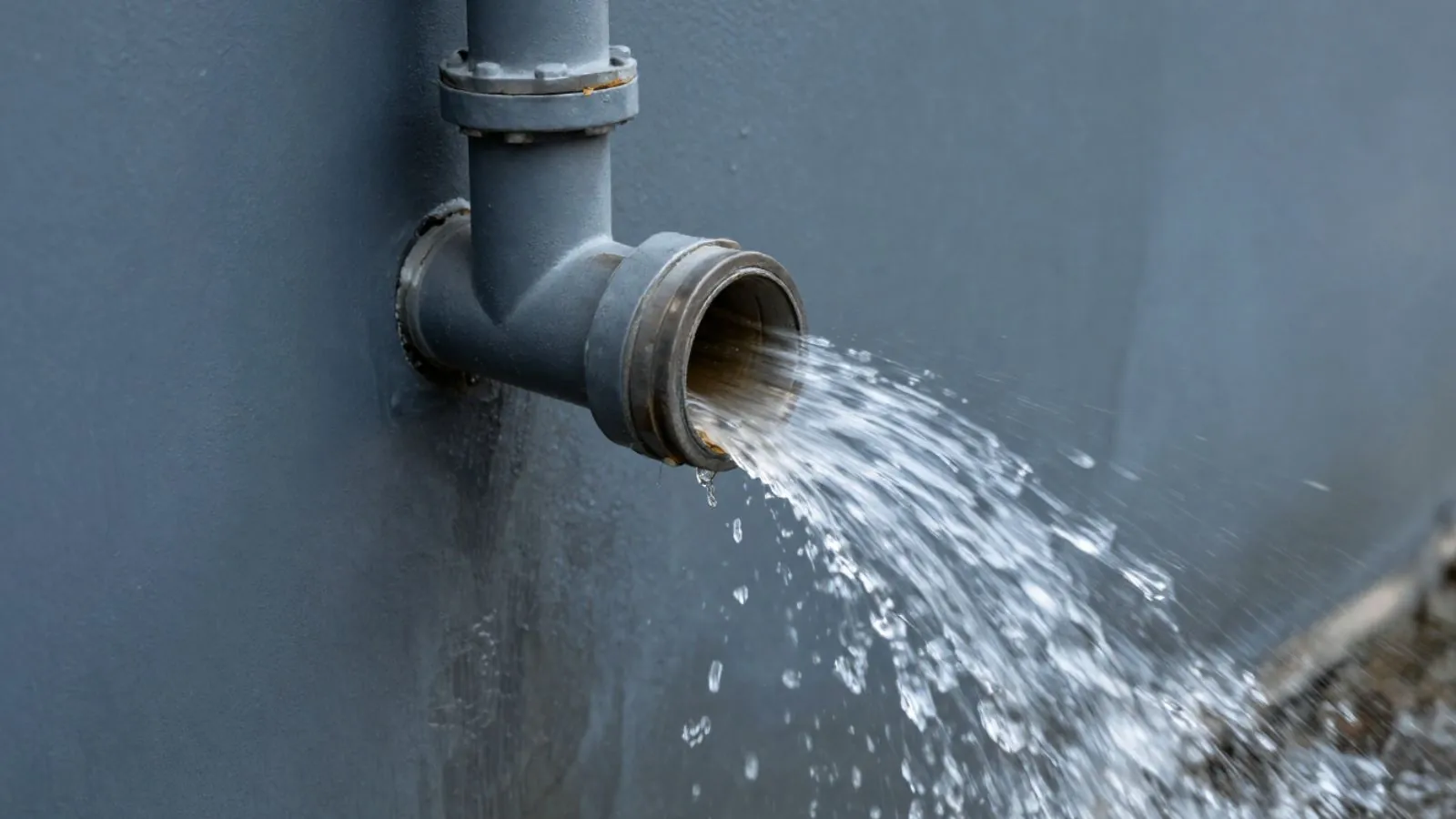
Frozen Pipe Damage Shows Up When the Ice Melts
Frozen pipes do not flood while they are frozen. Water expands as it turns to ice and can split a pipe or loosen a fitting, and the water pours out only when the ice melts. That is why a house can seem fine on a cold morning and be flooded by afternoon.
If water is running from a pipe that was frozen, treat it as an emergency. The line is answered 24/7, and the first step is to close the main shut-off valve while you wait.
Frozen pipe emergency: when the thaw starts
These signs mean a pipe has already failed:
- A faucet that was dripping or trickling in freezing weather and now runs hard.
- A wet spot on a ceiling or wall below an exterior wall, a crawl space or an unheated room.
- The sound of running water when everything is off.
- A frost line or bulge on a pipe that is no longer solid.
Do not use an open flame to thaw a pipe. If the pipe is still frozen and not leaking, opening the faucet and warming the room slowly can help, but any sign of a split means shut the water off and call.
Where frozen pipes tend to fail
Pipes freeze where cold air reaches them, such as exterior walls, unheated crawl spaces, garages, attics and basements near rim joists. The physics is the same in every house, but how often it happens in Manchester depends on the winter, and the National Weather Service publishes local temperature records if you want the numbers for a given season.
Any house has pipes in exterior walls, attics, garages or unheated rooms, and those are the runs that see the most cold. No local figure says how often this happens in Manchester, but it is why pipes in outside walls deserve a look before the first hard freeze.
How the cleanup works
- Shut the water off and extract anything standing.
- Take moisture readings and map the path the water took, including below the break.
- Remove wet insulation and open the wall or ceiling where the readings call for it.
- Dry the structure with air movers and dehumidifiers until the readings are normal.
- Rebuild the wall, ceiling or floor once the structure is dry.
A frozen pipe often damages the ceiling below, so the ceiling page and the burst pipe page cover the neighboring situations.
Frozen pipe, burst pipe and a thawed fitting compared
| Situation | What happened | Cleanup priority |
|---|---|---|
| Pipe split by ice | The wall of the pipe cracked as the ice expanded | Shut off water, extract, open the wall near the split. |
| Fitting loosened by freezing | A joint or valve was pushed out of seal | Often a drip, not a flood, but still wet insulation. |
| Frozen but intact pipe | No water is escaping yet | Thaw slowly, watch for leaks, call if any appear. |
Cost and insurance for frozen pipe water damage
What moves the price
These are the factors a crew weighs:
- How long the water ran after the thaw.
- Whether it reached a ceiling or floor below.
- The materials affected, especially insulation and plaster.
- The drying days needed.
- The rebuild scope.
Want your real number? Call (833) 521-1033.
A sudden failure caused by freezing is often a covered cause, but coverage rules vary with how the home was heated and maintained. Ask your insurer what it expects and keep photographs and receipts.
Water still spreading? Call now.
Call (833) 521-1033Before We Arrive: Thaw Leak Steps
Shut the main
Close the main valve if it is dry and reachable, then open a low faucet to drain the lines.
No open flame
Never use a torch or open flame on a pipe, frozen or not.
Power
Keep clear of wet outlets and the panel. Call the utility or 911 if you are unsure.
Lift and photograph
Move valuables off wet floors and photograph the split pipe and wet areas.
Preventing a repeat before the next freeze
After a thaw leak, the pipe is repaired, but the cause remains. Pipes in exterior walls, unheated crawl spaces and garages freeze again unless the cold air is blocked. Insulating the pipe, sealing gaps around where lines enter the wall and keeping cabinet doors open on very cold nights are common steps. A plumber can advise on pipes that need rerouting.
Know where your main shut-off is before winter. Everyone in the house should be able to close it in under a minute.
What the crew checks after a freeze leak
- The wall or ceiling around the split, using a moisture meter and thermal camera.
- Other pipes on the same exterior wall, since a hard freeze rarely hits just one.
- Insulation that has absorbed water and no longer works.
- Floor and ceiling below the break, where the water finally landed.
What follows a thaw leak
The wet area often needs structural drying, and a split inside a wall may need the repair described on the wall and drywall page. Standing water is covered on the water extraction page.
Drying goals for a thaw leak
ANSI/IICRC S500 asks a restorer to set a drying goal from the moisture content of unaffected materials in the same building and to document readings until wet materials reach it. After a pipe thaws inside a wall, that is how a crew proves the cavity is dry before it is closed.
Coverage for frozen pipe calls
After a cold snap the line can be busy with calls from all four Manchester ZIP codes, 06040, 06041, 06042 and 06045. Callers in East Hartford, Bloomfield, Broad Brook, South Windsor, Rocky Hill, Glastonbury, Marlborough, Hartford, East Glastonbury, Newington, Poquonock, East Windsor, Windsor, West Hartford, South Glastonbury, East Windsor Hill and Wethersfield reach the same dispatch. A freeze event often triggers several calls at once, so tell the dispatcher your address and whether water is still running.
Frequently asked questions
Do you handle frozen pipe emergencies at night or on weekends in Manchester?
Yes. The line is answered 24/7. Thaws often happen overnight or on weekends when heat comes back on, so those are common call times.
Should I turn the heat up to thaw a pipe?
Raising the temperature slowly is fine, but never use an open flame. If you see any leak or bulge, shut the water off and call instead of continuing to thaw.
How common are frozen pipes in Manchester?
It depends on the winter. The National Weather Service publishes local temperature records, and we do not state a frequency without a source.
Can a pipe split behind a wall without me noticing?
Yes. A split inside a wall can leak slowly until a stain, a smell or a higher water bill shows up. Moisture readings find the wet area without tearing walls open.
Still have questions? Call (833) 521-1033