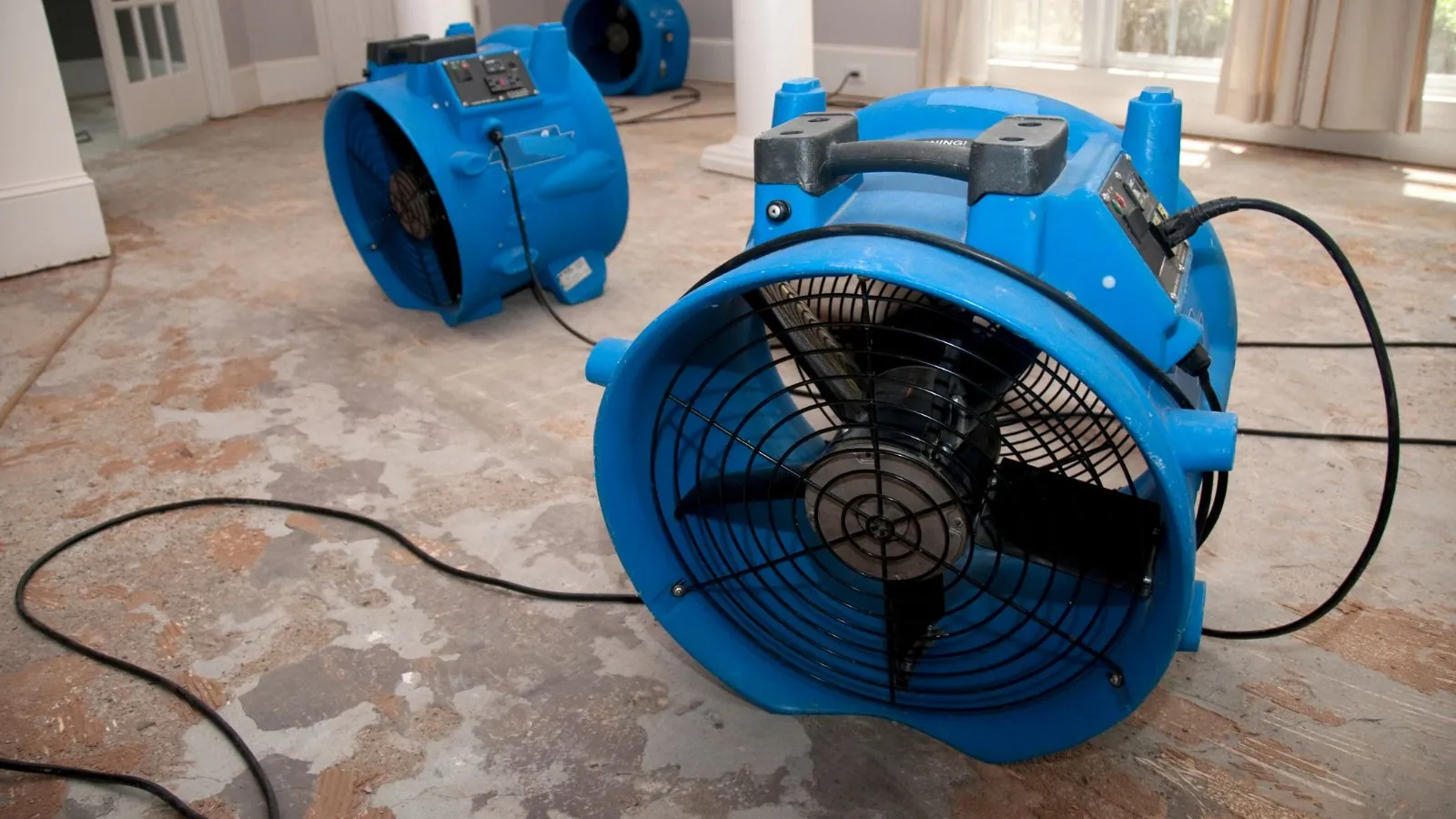
Floodwater in a Manchester Home Is an Emergency
Flooding means water entered from outside, rising from a brook, overflowing a drain or running across the ground after heavy rain. It is an emergency, the line is answered 24/7, and the safest thing to do before the crew arrives is stay out of the water.
Floodwater is treated as contaminated, so extraction, cleaning and disinfection follow strict rules and many porous materials are removed rather than dried. The goal is a building that is safe to live in again, not a floor that merely looks dry.
Before We Arrive: Floodwater Safety Steps
Electrical risk
Do not enter water that may touch outlets, wiring or the panel. Call the utility or 911 first if there is any chance power is live.
Contamination
Keep children, pets and anyone with open cuts out of the water, and wash hands after contact.
Document
Photograph water lines on walls and damaged contents before anything moves.
Call the line
Tell the dispatcher the depth, the source and whether it is still rising.
What Manchester planning documents say about flooding
Town planning documents list several waterways, the Hockanum River, Bigelow Brook, Birch Mountain Brook, Hop Brook, Lydall Brook and Porter Brook, and say the land drains west toward the Connecticut River basin. The same plan records that the summer storms of 2021 washed out Ambassador Drive, damaged Charter Oak Park and flooded a road near the wastewater treatment plant.
Those facts describe public property rather than any home, and a county or town record is not a flood zone for your address. The FEMA Flood Map Service Center shows whether a mapped flood hazard area touches your street, and Manchester revised its flood plain regulations in 2008 to meet National Flood Insurance Program standards.
How flood cleanup works
- Make the building safe, which means power, gas and structural checks before work begins.
- Extract the water and remove mud and debris.
- Remove materials that cannot be cleaned, usually carpet, pad, insulation and low drywall.
- Clean and disinfect hard surfaces and framing.
- Dry the structure to normal moisture readings, then rebuild.
Extraction is covered on the water extraction page, and the basement page covers the room where floodwater most often collects.
Flood, storm and sewer water compared
| Source | Why it is different | Usual result for materials |
|---|---|---|
| River or brook flooding | Rising water carries silt and contamination | Porous materials removed, hard surfaces disinfected. |
| Rain through the roof or windows | Usually cleaner but still degrades over time | Covered on the storm page. |
| Sewer backup | Grossly contaminated | Strict removal and disinfection, see sewage cleanup. |
Water still spreading? Call now.
Call (833) 521-1033Flood insurance and what it covers
The Connecticut Insurance Department says homeowners, condo and renters policies exclude flood damage, and it defines flood to include an unusual and rapid accumulation or runoff of surface waters from any source. Flood coverage is a separate policy through the National Flood Insurance Program or a private insurer, and a policy generally takes effect 30 days after purchase.
What moves the price of flood cleanup
Flood work is priced from the scope, which depends on:
- How high the water rose and how long it stood.
- The contamination category.
- The number of rooms and floors reached.
- The materials that must be removed.
- The drying days and the rebuild scope.
Want your real number? Call (833) 521-1033.
Contamination categories and why they matter
Restoration standards sort water into categories. Category 1 comes from a clean source such as a supply line. Category 2 carries some contamination, such as washing machine or dishwasher discharge. Category 3 is grossly contaminated, and it includes sewage and floodwater from outside. Clean water becomes worse the longer it sits, so a Category 1 loss that is ignored for days is treated as Category 2 or 3.
Floodwater is Category 3 from the start. The rules for it are strict, because it carries soil, bacteria and chemicals from the ground and from storm drains.
What to save and what to leave to the crew
- Photographs, documents and keepsakes can often be cleaned and dried by specialists, so bag and set them aside.
- Furniture with solid wood frames can often be cleaned, while upholstery usually cannot.
- Appliances and electronics that touched floodwater should not be turned on until checked.
- Food and medicine that touched floodwater should be thrown out.
Your own safety matters more than any object. Wear boots and gloves, and do not drain a flooded basement all at once, because the pressure outside the wall can crack it.
Flood water and the contamination categories
ANSI/IICRC S500 treats flood water that has crossed the ground as Category 3, which means it is presumed to carry contaminants. Porous materials that soaked in it are normally removed instead of dried. Knowing this before the estimate helps you read why a scope lists more demolition than a clean pipe leak would. Standing water is removed first through water extraction and the basement scope is covered under basement water damage cleanup.
Where flood crews respond
Flood crews take calls across 06040, 06041, 06042 and 06045. The same crews answer from East Glastonbury, Glastonbury, East Hartford, East Windsor, South Windsor, Rocky Hill, Poquonock, Broad Brook, East Windsor Hill, Hartford, South Glastonbury, Wethersfield, Marlborough, Windsor, West Hartford, Newington and Bloomfield. Tell the dispatcher your address and whether water is still entering.
Frequently asked questions
Do you handle flood emergencies at night or on weekends in Manchester?
Yes. The line is answered 24/7. Heavy rain often arrives at night, and the dispatcher takes the call whenever it comes.
Is my flooded basement covered by homeowners insurance?
Usually not if the water came from outside. The Connecticut Insurance Department says flood damage is excluded from standard homeowners policies, so check whether you carry separate flood coverage.
Can carpet that was in floodwater be saved?
Usually not. Floodwater is treated as contaminated, so carpet and pad are normally removed. Hard surfaces and framing can often be cleaned and dried.
Is my address in a flood zone?
Look it up on the FEMA Flood Map Service Center. A mapped zone applies to specific areas, and we do not state a zone for any property.
Still have questions? Call (833) 521-1033