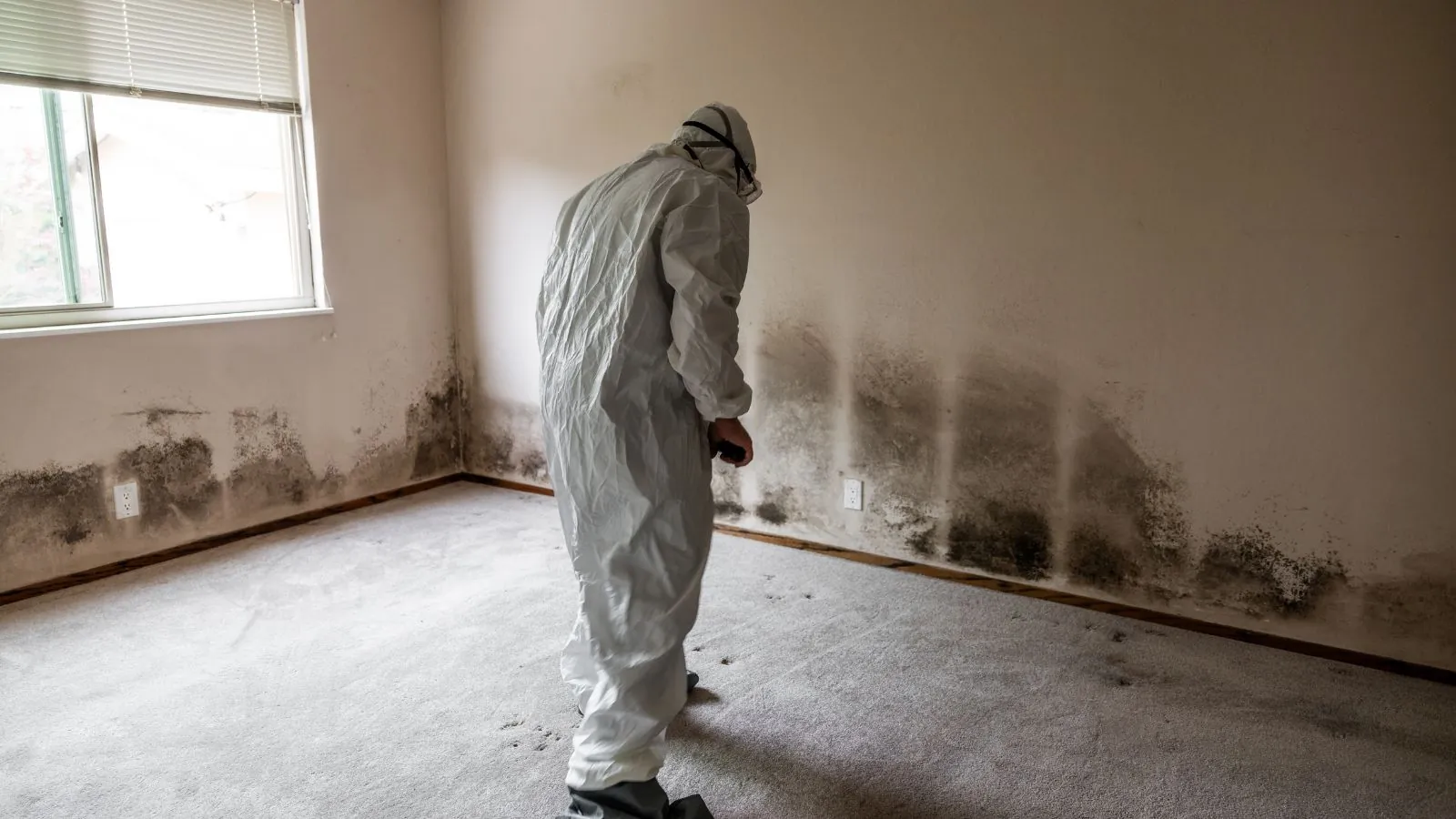
Why wood can sometimes be saved
Wood framing is solid and structural, so it is cleaned more often than drywall is. Surface growth on a joist that dried quickly can often be removed, and the wood stays in service. Deep rot or long soaking changes that, since soft wood has lost strength and has to be replaced.
The first question is whether the wood is still firm. Press a screwdriver tip into it. If it sinks in easily, the wood is soft and needs a professional opinion.
Types of wood and what they tell you
| Wood item | Often cleaned if | Often replaced if |
|---|---|---|
| Floor joists and studs | Growth is on the surface and the wood is firm | Wood is soft or crumbly. |
| Subfloor plywood | Surface only and dried quickly | Layers delaminate or swell. |
| Trim and baseboard | Only stained | Warped or deeply stained. |
| Solid wood furniture | Surface growth, dried | Finish and wood are deeply affected. |
| Particleboard and OSB | Rarely | Usually swelled and weakened. |
Basic process for a surface cleaning
Professionals use HEPA vacuuming and approved cleaners, sometimes with sanding or wire brushing of the surface in containment. The purpose is to remove growth from the surface of the wood and leave a clean substrate. The cleaning is followed by drying and sometimes by a protective coating.
- Contain the area so dust stays in the work zone.
- HEPA vacuum the surface to remove loose growth.
- Clean or abrade the surface with methods suited to the wood.
- HEPA vacuum again and wipe clean.
- Dry the wood and verify moisture readings before closing up.
This is the general approach, not instructions for doing the work yourself. Many people choose not to do it themselves, since dust control is the hard part.
What not to do
- Do not dry-sand or power-brush in an open area, which spreads spores.
- Do not paint over mold, which hides it but does not stop it.
- Do not use bleach as a full answer, since it does not reach deep into wood.
- Do not close up a wall or floor before the wood has dried.
A crew can explain why a given piece of wood is cleaned or replaced, and it should show the readings that support the decision.
Water still spreading? Call now.
Call (833) 521-1033Fix the moisture or the growth returns
Wood that gets wet again grows mold again. The source might be a roof leak, a plumbing leak, a humid crawl space or condensation on cold framing. Drying and sealing are not enough without a source fix. The crawl space page and the ceiling page describe two common situations.
Keeping relative humidity below about 60 percent indoors and venting bathrooms and dryers to the outdoors lowers the risk.
How a crew decides between cleaning and replacing
The decision comes from three things: the readings, the condition of the wood and how long it stayed wet. Wood that tests dry now but was wet for weeks may still have deep growth. Wood that was wet for a day and dried fast usually has surface growth at most. A crew presses a probe into the wood, checks for soft spots and looks at the grain for dark staining that runs deep.
If the wood carries load, such as a joist, a beam or a sill plate, a carpenter or engineer may be asked to confirm that it is still sound. Structural questions should never rest on a guess.
A short checklist before anyone starts
- Is the moisture source found and stopped?
- Is the wood firm, or does a probe sink in?
- How large is the area, and is it more than a small patch?
- Is the work inside a wall, an attic or a crawl space where containment is hard?
- Will the area be closed up afterward, and can readings be taken first?
If the answers point to a large or hidden area, a crew with containment and HEPA equipment is the safer choice than a home project.
How the standard treats wood
ANSI/IICRC S520 recognizes that wood is porous. Light surface growth on structural wood can often be cleaned, while wood that is soft, deeply stained or rotted is typically replaced. The standard also expects the moisture source to be corrected before cleanup.
Furniture and wood items
A wooden chair or table with surface growth can often be wiped clean outdoors and dried in sun and air. Antiques and pieces with veneers or old finishes need more care, and a conservator may be the right person to ask. Upholstered furniture and anything porous is harder to treat and is often discarded.
Wear gloves and a mask suited to dust if you handle moldy items, and work outdoors where possible.
Older wood in Manchester buildings
The Manchester Historic District, about 500 acres west of Main Street, is listed on the National Register of Historic Places and is mostly one and two family wood-frame houses. Old framing and trim can be worth saving, which is a reason to find the source of moisture early. See the Downtown Manchester page for local background.
If framing has to be replaced, a carpenter or the Building Inspection Division can say whether a permit is required.
Frequently asked questions
Can I sand mold off a joist?
Surface growth on firm wood is sometimes removed by abrasion, but sanding without containment spreads dust. A crew does it with HEPA vacuums and barriers.
How do I know the wood is rotten?
Soft, crumbly or easily punctured wood has lost strength. Ask a crew or a carpenter to look at it.
Is painted trim with mold salvageable?
Sometimes, if the growth is on the surface and the wood is firm. Heavily stained or warped trim is usually replaced.
Will cleaning stop it from coming back?
Only if the moisture source is fixed and the wood is dried. Cleaning alone does not stop new growth.
Still have questions? Call (833) 521-1033